



How to
by Ryan (Puppy Play Expert)
If you’ve ever been to a fetish event like Torture Garden, Pride, or certain queer spaces, you’ve probably seen someone in a pup hood.
Maybe they were on all fours. Maybe they were being led on a leash. Or maybe they were just moving through the space in a way that felt… different.
And if you’re new to it, the first reaction is usually curiosity.
What is this? And why are people so into it?
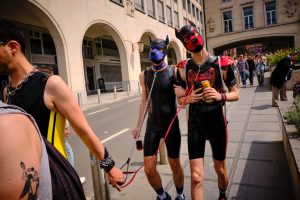
Pup play sits under the wider umbrella of pet play, a form of roleplay where people take on animal-like roles. In this case, the role is a pup.
There are different dynamics within it. Some people are pups, others take on the role of handler or owner, and some switch between both. You’ll also find pup packs, which are social groups built around connection and shared identity.
“It can be sexual, non-sexual, or a mix of both. That depends entirely on the people involved.”
If you’re curious about the handler side of things, there’s a great article by Divine Theratrix on Pet Play Dynamics that explores that perspective. But here, the focus is on the pup role, and why it resonates so strongly with some people.
Pup play has grown a lot in recent years, especially among younger, queer, and neurodivergent communities.
At the same time, it’s not limited to one type of person. You’ll find people from all kinds of backgrounds getting into it. Different ages, professions, lifestyles. People you wouldn’t necessarily expect.
One of the reasons for that growth is how approachable it feels compared to other forms of kink. There’s less pressure to “perform it correctly” and more room to just explore what feels right.
And a big part of that comes down to the community itself.
The pup community is one of the most open and welcoming spaces I’ve personally experienced.
There’s a noticeable lack of judgment. You don’t need to look a certain way, act a certain way, or already know what you’re doing. People are generally more interested in how you express yourself than whether you’re doing it “right.”
You’ll see a wide spectrum of identities. Different genders, sexualities, body types, personalities. Some people lean heavily into aesthetics and performance, others keep it minimal and focus more on the headspace.
Both are equally valid.
There’s also a strong sense of mutual respect. Even in playful or chaotic environments, there’s usually an underlying awareness of boundaries, consent, and looking out for each other.
For people who haven’t always felt comfortable in more traditional social settings, that kind of environment can make a big difference.
It gives people the space to show up as they are, or to experiment with who they could be, without feeling like they’re being evaluated.
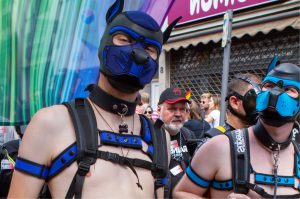
One of the main reasons people are drawn to pup play is something often called pup headspace.
It’s not a technical term, but most people who experience it know exactly what it means.
“It’s a mental shift. Less overthinking, more reacting. Less pressure, more presence.”
Instead of constantly monitoring yourself or thinking ahead, you’re just responding to what’s happening around you. Playing, moving, interacting in a more instinctive way.
It can feel grounding. Sometimes even calming.
If you’ve ever been completely absorbed in something, music, sport, a moment where you stop analysing and just exist in it, it’s a similar feeling.
Pup play just gives people a way to access that state more intentionally, and more often.
Most of us spend a lot of time being a very specific version of ourselves.
At work, we’re expected to be focused, reliable, and composed. In daily life, there are still expectations about how we should act, speak, and present ourselves.
Over time, that becomes the default.
But it also means there are parts of us that don’t get much space.
Playfulness, curiosity, spontaneity. Even just the ability to let go and not think about how you’re coming across.
Those things tend to get filtered out.
And eventually, people start craving something that balances that out.
As kids, we didn’t have that same structure. We experimented. We played different roles. We tried things without worrying how it would be perceived.
As adults, doing that can feel unfamiliar. Sometimes even slightly uncomfortable.
Pup play creates a space where that kind of exploration feels natural again.
There’s a layer of separation that helps. You’re not just “acting differently”, you’re stepping into a role. And that makes it easier to let go of the expectations you normally carry.
For some people, that’s the appeal.
For others, it becomes something deeper over time.
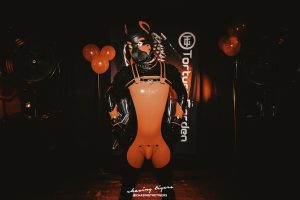
A friend of mine, Rexi, is someone I’ve seen go through that shift in a very real way.
He’s worked as a data engineer for over a decade. His world is structured, logical, and predictable. The kind of environment where efficiency, accuracy, and low-risk thinking are rewarded.
For years, he showed up in exactly the same way. Same clothes, same habits, same way of interacting with people.
There wasn’t much room, or need, to explore anything outside of that.
When he got into pup play, it didn’t replace that version of him. But it gave him something completely different alongside it.
In pup headspace, he wasn’t the person optimizing systems anymore. He was more instinctive. More expressive. Sometimes playful, sometimes bold, sometimes even a bit chaotic.
At first, it was just about the experience itself.
But over time, it turned into something more.
He started experimenting with different looks and styles. Not just wearing gear, but actually thinking about how he wanted to present himself. What kind of energy he wanted to bring into a space.
Some days that meant bright colors, playful behavior, something more social and open.
Other days it meant a more grounded, dominant presence. Less movement, more control, a completely different kind of expression.
Each of those “pupsonas” wasn’t random. They were different sides of him that hadn’t had much space before.
And because there was no pressure to get it right, he felt comfortable exploring them.
“Over time, that confidence started to show up outside of pup play too.”
He became more open socially. More expressive in how he dressed. More willing to step outside of the very narrow version of himself he had been operating in for years.
It wasn’t a dramatic overnight change.
But it was noticeable.
And it all started with having a space where he felt safe enough to explore something different.
You don’t need gear to experience pup headspace.
But for a lot of people, it makes the shift much easier.
Seeing yourself differently changes how you feel. Putting on a hood, a collar, or other pup play gear creates a clear break from your everyday identity.
It signals that it’s okay to step into something else.
For some people, that’s what makes it easier to stop overthinking and just engage with the moment.
It doesn’t have to be a full transformation either. Even small pieces can make a difference.
If you’re curious about trying it, exploring different types of pup play gear can help you find what feels right for you. And if you’re completely new, starting with a simple beginner guide to pup play can make the whole process feel a lot less overwhelming.
For some, pup play is something they try once out of curiosity.
For others, it becomes something they come back to regularly.
What makes the difference is usually how it makes them feel.
Less restricted. More present. More open to exploring different sides of themselves.
It’s not really about pretending to be something else.
It’s about giving yourself space to experience parts of yourself that don’t always fit into everyday life.
And once people feel that, it tends to stick.
Author
Ryan is the founder of Puppy Play Expert, where he focuses on helping people explore pup play through practical guides and accessible gear. His work centers around identity, expression, and making kink more approachable for beginners.
Scala
Scala